i’m creating series which has a path where user completes tour then a custom bot comes up. however, if the user cancels the tour, I want the bot to still come up after they cancel. i don’t see a rule that caters to this. is this simply 'when user viewed tour'? 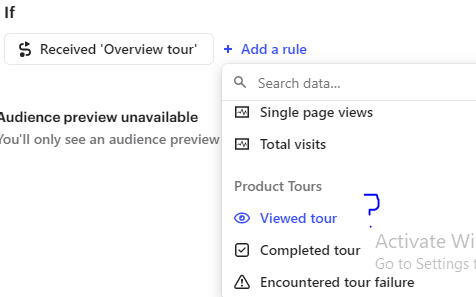

Answered
what is considered as “when user encounter failure” in a tour.
Best answer by Racheal
Hey @ima Racheal from the Support Engineer team here 👋
'Has encountered failure on the tour' refers to any time that a user encounters an issue with being able to move forward within a tour. Most commonly this means that the tour was unable to find a CSS selector for a pointer step which will cause the tour to fail. If a user simply exits out of the tour themselves by clicking on the "X" on any of the steps, this will not register as a failure.
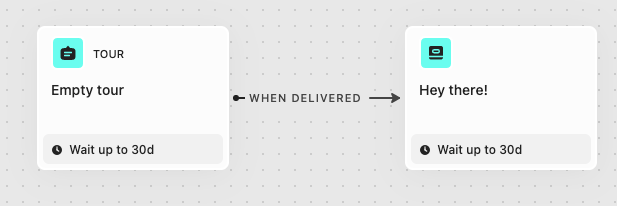
If you'd like the Custom Bot to trigger no matter what, you actually don't need to add an additional rule here at all! You can simply leave "when delivered" like so:




Join the Intercom Community 🎉
Already have an account? Login
Login to the community
No account yet? Create an account
Intercom Customers and Employees
Log in with SSOor
Enter your E-mail address. We'll send you an e-mail with instructions to reset your password.